How to Water Indoor Plants While Away for 1, 2 or 3 Weeks
Prepare indoor plants for a one-, two- or three-week trip with tested watering methods, a practical checklist and smart planter guidance.
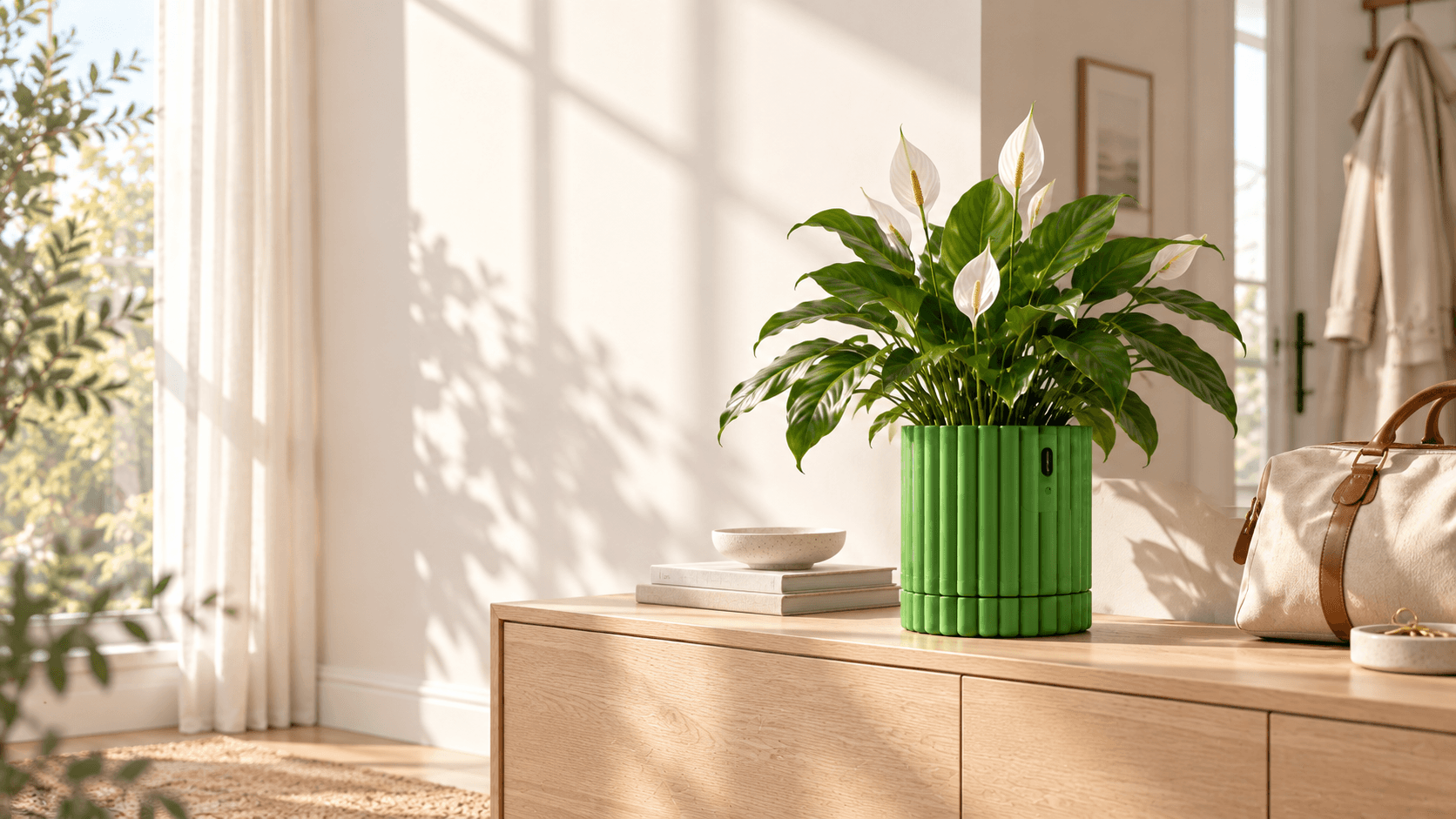
The best way to water indoor plants while away is to prepare for the length of the trip, test the method before departure and reduce avoidable stress without changing the plant’s whole environment. For a few days, a normal thorough watering may be enough. For one or two weeks, a reservoir, wick or tested automatic system can help. For three weeks, combine automation with a trusted human check.
The biggest mistake is improvising on departure day. An untested bottle, a sudden move into darkness or one enormous “just in case” watering can create more risk than the holiday itself.
Use this guide to build a plan around your plants, home and time away.
First estimate the real risk
Not every plant needs the same level of preparation. Before choosing a vacation watering system, consider five factors.
Plant type
Succulents, cacti, ZZ plants and snake plants store water or tolerate a longer dry period. Many ferns, fittonias, peace lilies and flowering tropical plants use moisture more steadily. A method that saves a fern can leave a succulent too wet.
Pot size and material
Small pots dry faster because they hold less water. Unglazed terracotta also loses moisture through its walls, while glazed ceramic and plastic retain it longer. A large plant in a small pot can be surprisingly thirsty.
Light and temperature
Bright light and warm conditions usually increase water use. A plant beside hot glass may dry rapidly even if it was recently watered. Air conditioning, heating and fans change the rate as well.
Soil structure
An airy mix may dry faster but provides oxygen around roots. Dense soil can look moist for a long time yet drain poorly. Vacation is not the moment to compensate for unsuitable soil with extra water.
Trip length
Count door-to-door days, not nights at the destination. Add a small margin for delays, but do not flood the plant for a hypothetical emergency. Build redundancy instead.
If you are away for less than one week
Most established houseplants can handle a short absence if they begin in good condition.
One or two days before leaving, check the soil. If the plant is ready for water, water thoroughly and allow excess to drain. Empty the saucer so the pot is not sitting in water. If the soil is still comfortably moist, do not water simply because a flight is scheduled.
Move plants away from intense midday sun, radiators and strong vents, but keep them in appropriate light. A position a little farther from hot glass can slow water loss. Do not place sun-loving plants in a dark bathroom for the week.
Group compatible tropical plants loosely so the local air is less exposed, while preserving airflow. Remove dead leaves and check for pests. Avoid heavy feeding or major repotting immediately before departure.
For many plants, that is enough.
If you are away for one to two weeks
At this duration, small pots and moisture-loving plants may need help. Choose a method you can test at least a week in advance.
Passive self-watering pot
A reservoir and wick can provide continuous access to water. It suits plants that prefer even moisture when the wick strength and soil are compatible. Fill the reservoir and confirm that moisture moves through the mix without leaving it saturated.
Capillary mat
A capillary mat draws water from a source and supplies pots placed on its wet surface. It works best with containers whose drainage holes and potting mix make good contact. Protect furniture and test the setup for leaks, uneven flow and excessive wetness.
Watering spike or bottle
Ceramic cones, stakes and inverted bottles release water gradually. Flow depends on the device, soil and bottle height. Test with the exact container and placement you plan to use; improvised bottles can empty too quickly or fail to flow.
Sensor-controlled automatic planter
An automatic vacation watering system with soil sensing can wait until the root zone reaches its target threshold, then deliver a measured amount from an integrated reservoir. This is more responsive than a fixed timer, but it must be observed through several normal cycles before travel.
Chlora One is designed around this feedback loop. The selected plant profile sets moisture and watering rules, the pot checks the soil, and the pump runs only when conditions call for water. The app can show care status, last watering, next check, reservoir alerts and offline status.
A plant sitter
A friend or neighbor is still an excellent option, especially for a varied collection. Make the job simple: group plants by need, label any exceptions and leave measured containers or clear amounts. “Give them a little water” is too vague.
If you are away for two to three weeks
For longer trips, one mechanism is rarely enough. The Royal Horticultural Society recommends considering a trusted person when going away for longer than a couple of weeks. That is sensible because reservoirs empty, weather changes and devices can lose power or connectivity.
Use a layered plan:
- Stabilize care in advance. Correct pest, drainage and placement issues several weeks before travel.
- Use a tested primary method. This might be a smart planter, passive reservoir or capillary system.
- Add a human checkpoint. Ask someone to visit once or twice, inspect the leaves and soil, refill reservoirs and confirm that devices are online.
- Leave precise instructions. Identify which plants should remain dry and which require attention.
- Make access easy. Put water, a measuring jug and any app or device instructions in one obvious place.
If you use connected equipment, decide what the helper should do when an alert arrives. A screenshot saying “offline” is less useful than a plan: check the plug, verify Wi-Fi, inspect the reservoir and contact you before manual watering.
The pre-holiday checklist
Two to three weeks before
- Observe how quickly each pot normally dries.
- Test any wick, spike, mat or automatic watering system.
- Confirm the correct plant profile and sensor placement.
- Check that water reaches the soil and moisture responds afterward.
- Fix drainage problems and treat active pests.
- Choose the person who can help if needed.
Three to five days before
- Review the weather forecast and indoor heating or cooling schedule.
- Check reservoir capacity against real recent use.
- Clean saucers and remove dead material.
- Group plants by care need without creating a crowded, airless cluster.
- Write instructions with quantities and “do not water” notes.
The day before
- Water only the plants that are ready.
- Allow pots to drain fully and empty saucers.
- Fill tested reservoirs with clean water.
- Confirm batteries, power, Wi-Fi and recent sensor timestamps.
- Move vulnerable plants slightly away from heat or harsh sun while retaining useful light.
- Photograph the setup so you can explain it remotely.
On departure day
- Check for leaks.
- Confirm the home temperature setting.
- Make sure curtains or blinds will not leave plants in total darkness.
- Send access details and your concise care note to the helper.
What not to do
Do not drown plants in advance
Soaking already-moist soil does not create a useful reserve. It displaces air around roots and can keep the medium wet for too long. Water thoroughly only when the plant is ready, then let excess drain.
Do not move every plant into darkness
Lower light can slow water use, but plants still need suitable light. A sudden dark relocation adds stress and may make soil dry much more slowly than expected.
Do not repot at the last minute
Fresh soil, disturbed roots and a new container change the plant’s drying pattern. Repot early enough to observe recovery, or wait until you return.
Do not test an automatic system while you are gone
A pump, sensor or wick should prove itself under supervision. Run multiple cycles and review how the plant responds.
Do not give every plant the same instruction
A cactus and a fern should not share a vacation watering schedule simply because they sit on the same shelf.
How much water does a plant need while you are away
There is no reliable universal number. Water use depends on plant size, leaf area, growth rate, light, temperature, humidity, soil and pot. Historical consumption is the best guide.
If your automatic planter records delivered volume, review several weeks rather than one unusually hot or cool period. Leave extra capacity, but respect the reservoir’s fill line. If you are using a plant sitter, pre-measure typical amounts and ask them to check the soil before pouring.
Making Chlora travel-ready
Chlora is designed to reduce calendar-based watering, which makes it naturally useful for travel. Before leaving:
- Confirm the plant profile is correct.
- Check that moisture readings are current and believable.
- Fill the reservoir and verify the low-water alert.
- Review the most recent automatic watering event.
- Confirm the pot is online on 2.4 GHz Wi-Fi.
- Keep notifications enabled for watering, soil, reservoir and offline events.
- Give a trusted person access to the physical pot for longer trips.
Do not manually add a deep soak merely to “top up” the soil. Let the plant profile and sensor history guide the decision.
When you return
Inspect before acting. Look at the leaves, soil surface, reservoir and app history. A wilted plant is not automatically dry; wet roots can also struggle. Check moisture and drainage before adding water.
Return plants gradually to any brighter position you changed. Empty stale standing water, clean the reservoir if required and note what worked. That record will make the next trip easier.
If one plant struggled while the rest were fine, treat it as an individual problem. It may need a different pot, soil, light level or care profile rather than a more aggressive system for the whole collection.
A simple plan by trip length
| Time away | Practical starting point | | --- | --- | | 1–4 days | Water when due, drain well, reduce heat stress | | 5–10 days | Add a tested reservoir, wick or sensor-controlled system for thirsty plants | | 11–14 days | Check capacity carefully and consider a human visit | | 15–21 days | Use tested automation plus at least one trusted-person checkpoint |
These are planning ranges, not guarantees. A tiny fern in summer may need help sooner; a healthy cactus may need none.
Frequently asked questions
Can houseplants survive two weeks without water
Some can, especially established dry-tolerant plants in moderate conditions. Others cannot. Evaluate the species, pot, season and actual drying history rather than relying on a general rule.
Should I leave plants in a bathtub
Only if the setup has been tested and the plants still receive suitable light and airflow. Standing pots in deep water can saturate the soil. A capillary mat or carefully managed wick is more controlled than filling the tub.
Are watering globes reliable for vacations
They can work, but flow varies with soil contact and the opening. Test the globe for the full intended duration before relying on it.
Should I ask a neighbor to water
For trips longer than a couple of weeks, valuable or demanding plants, or any untested system, a trusted person is wise. Give specific instructions and identify plants that should not be watered.
Can a smart planter replace a plant sitter
It can reduce routine visits and provide remote visibility. It cannot refill itself, restore power or diagnose every physical problem. For long trips, automation plus a human backup is the most resilient plan.
Sources and further reading
- Royal Horticultural Society, Houseplants holiday care: https://www.rhs.org.uk/plants/types/houseplants/holiday-care
- Royal Horticultural Society, How to look after your garden on holiday: https://www.rhs.org.uk/garden-inspiration/get-gardening/how-to-look-after-your-garden-on-holiday
- University of Minnesota Extension, Spring houseplant care: https://extension.umn.edu/garden-and-home/yard-and-garden/gardening-in-minnesota/houseplants/spring-houseplant-care
- Chlora One user manual and product source material