Best Plants for Self-Watering Pots—and Which Need Smarter Care
Discover which indoor plants suit self-watering pots, which prefer a dry-down, and when a sensor-controlled smart planter is the better fit.
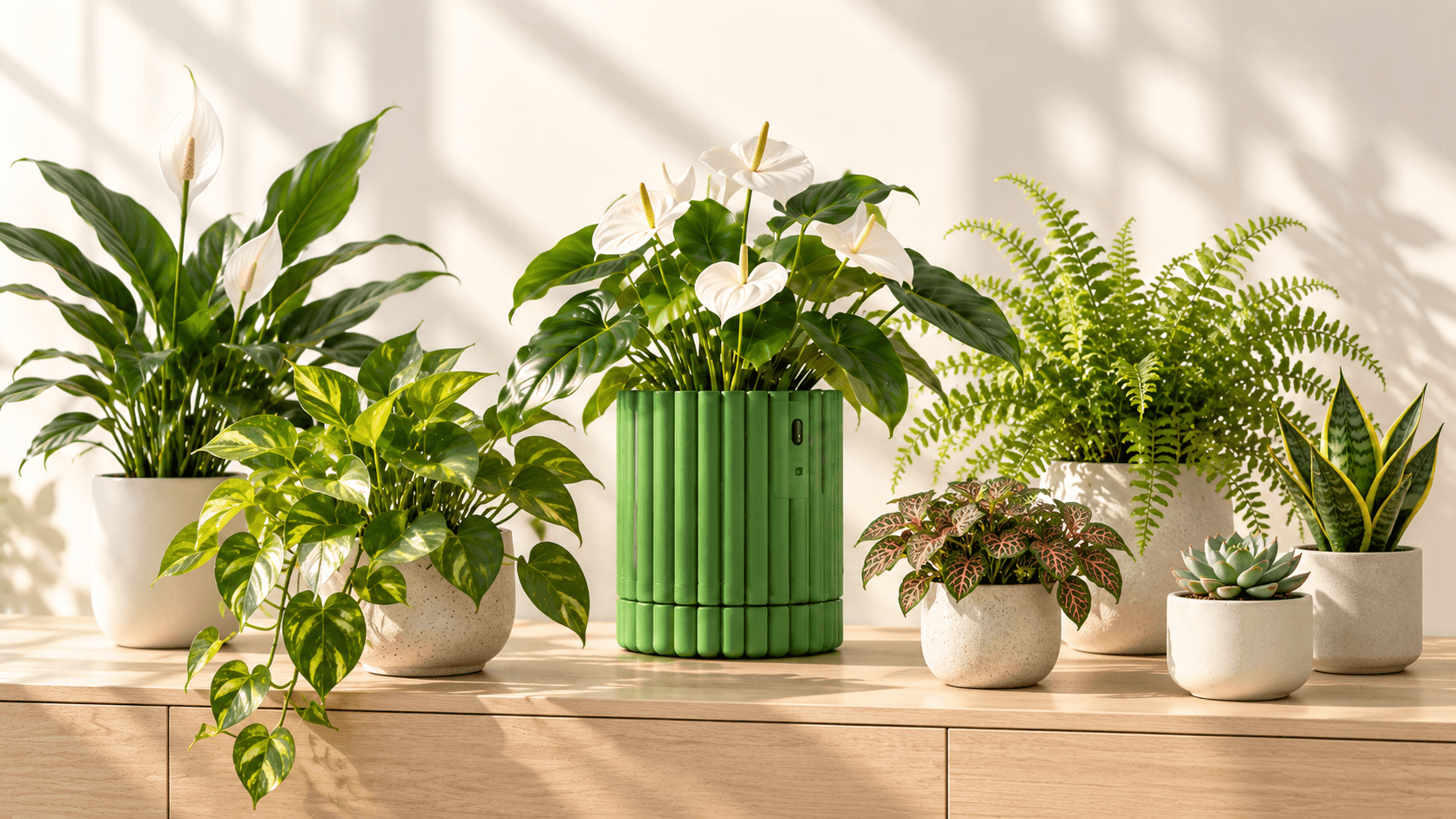
The best plants for self-watering pots are generally those that prefer steady access to moisture without sitting in airless, waterlogged soil. Peace lilies, fittonias, many ferns, pothos and several tropical foliage plants can be good candidates when the reservoir, wick and potting mix are correctly matched.
Plants that need a pronounced dry period—such as many cacti, succulents, snake plants and ZZ plants—require more caution. They may be better in a conventional draining pot or a sensor-controlled smart planter that can wait for a lower moisture threshold rather than providing continuous access to water.
The pot alone does not decide success. Plant type, soil, light, temperature and root health all work together.
What makes a plant a good candidate
A passive self-watering planter normally holds water below the root zone and draws it upward through a wick or capillary column. That creates a relatively consistent moisture supply. The best candidates share three traits.
First, they do not require the entire root ball to become very dry between waterings. Second, they grow in a mix that can move moisture while retaining air spaces. Third, their root system fits the container and can use water at roughly the rate it becomes available.
A plant can be moisture-loving and still suffer in saturated soil. “Evenly moist” does not mean “constantly soaked.” University of Minnesota Extension guidance notes that most houseplants prefer steady moisture rather than soaking-wet conditions. Drainage and oxygen remain essential.
Ten plants that can suit self-watering pots
1. Peace lily
Peace lilies are expressive plants that often droop when dry. They generally appreciate fairly consistent moisture, making them natural candidates for a well-tuned reservoir pot. Use an airy indoor mix and avoid keeping the crown buried or the soil swampy.
A smart planter can be useful if you want to distinguish a normal drying cycle from persistently wet soil. Light also matters: a peace lily in lower light will usually use water more slowly.
2. Fittonia
Fittonias have thin leaves and can wilt dramatically when the mix dries too far. Their preference for stable moisture suits capillary watering, especially in small pots that would otherwise dry quickly.
They still need airflow and a mix that does not collapse. A gentle wick is preferable to an oversized one that saturates the whole pot.
3. Boston fern and other tropical ferns
Many indoor ferns prefer consistent moisture and can struggle with repeated drought. A self-watering system can buffer the dry intervals common in heated or air-conditioned homes.
Ferns also respond to humidity and light. A water reservoir does not correct very dry air, harsh sun or a hot radiator. Monitor the whole environment.
4. Pothos
Pothos is adaptable and forgiving. It can work in a self-watering pot once established, particularly in bright indirect light. Because it also tolerates some drying, avoid an aggressive wick that keeps heavy soil saturated.
Watch the drying pattern as the vines grow. More leaf area can increase water use, so a setup that once stayed full for weeks may empty faster later.
5. Heartleaf philodendron
Like pothos, heartleaf philodendron appreciates moisture but benefits from air around the roots. It is a good candidate when the reservoir maintains a gentle, stable supply rather than permanent wetness.
Choose a mix with bark or other structural material, and clean the reservoir regularly.
6. Anthurium
Anthuriums generally prefer an airy root zone with fairly consistent moisture. Their thicker roots and epiphytic background make dense, waterlogged soil a poor match, so the potting mix is especially important.
A sensor-controlled planter can offer an advantage here: it can wait for the selected moisture threshold and deliver a measured amount rather than leaving a strong wick continuously connected.
7. Calathea and prayer plants
Many prayer plants react to irregular moisture and low humidity. A stable reservoir can reduce sharp dry-outs, but water quality, humidity and temperature may still affect leaf edges.
Do not assume every brown tip means the reservoir is empty. Review light, drafts, salts and humidity as well.
8. Spider plant
Spider plants are resilient and can adapt to a self-watering system. They prefer not to remain soggy, so allow a moderate moisture cycle and use free-draining soil.
Mature plants can become root-bound and may use reservoir water quickly. Check capacity before travel.
9. African violet
African violets can benefit from bottom watering because it keeps water off fuzzy leaves and crowns. Purpose-designed self-watering pots are common for them. The wick, pot size and mix should be balanced so moisture is available without saturating the roots.
Bright indirect light is important for flowering. Automatic water cannot compensate for insufficient light.
10. Many leafy herbs
Basil, mint and parsley can be thirsty in bright light, especially when harvested regularly. A reservoir may reduce wilt in small indoor herb pots.
Herbs vary. Rosemary, thyme and lavender prefer a drier, highly draining root zone and should not be grouped with basil simply because all are culinary plants.
Plants that need more caution
Cacti and succulents
Cacti and succulents store water in leaves or stems and generally need modest watering and well-drained soil. A constantly active wick can keep roots wet too long. If you use a reservoir system, choose a very weak connection and verify a full dry-down; a conventional pot may be simpler.
Snake plant
Snake plants tolerate low water and often fail because of excess moisture rather than a brief dry spell. They can work in a carefully controlled smart planter, but they are poor candidates for a saturated mix.
ZZ plant
The ZZ plant stores water in thick underground rhizomes. It usually prefers the mix to dry substantially. Prioritize drainage and restraint.
Aloe
Aloe needs strong light and a gritty, fast-draining medium. Continuous moisture around the roots can be risky. Use a sensor-led system only if it can support long dry intervals.
Rosemary and Mediterranean herbs
Rosemary, thyme, sage and lavender prefer bright light, excellent drainage and a more pronounced dry-down than basil or mint. A passive reservoir can be difficult to tune indoors, where light may already be limited.
Orchids
Many commonly grown orchids live in bark or another open medium rather than ordinary potting soil. Their roots require air, and moisture sensors designed for soil may not read bark reliably. Use a pot and watering method intended for the specific orchid.
When a smart planter is better than a passive reservoir
A passive self-watering pot responds through physics. A smart planter can respond through rules. That matters when the plant benefits from a clear drying interval, the room changes seasonally or you want to see what happened.
In Chlora One, soil moisture is checked on a schedule and watering is triggered only when the selected plant profile indicates that the soil is dry enough. The pump delivers a measured amount from the integrated reservoir. The app can also show moisture, care status, last watering, next check and alerts.
This feedback does not remove the need for suitable soil or light. It does allow the system to stop treating all plants as if they wanted the same continuous moisture supply. Chlora’s care system is being developed around profiles for more than 500 plants.
Match the soil to the watering method
The same plant can behave very differently in two mixes. A peat-heavy, compacted mix may hold water for a long time. A mix with bark, perlite, pumice or coarse components may drain and aerate more freely.
For passive wicking, the medium must be able to draw moisture upward. If it is too coarse, the wick may not distribute water evenly. If it is too fine or packed tightly, it may stay saturated.
For sensor-controlled watering, stable contact around the probe matters. Avoid air pockets, but do not compress the soil into a solid mass. Follow the pot and plant instructions rather than copying a universal recipe.
Match the pot size to the plant
An oversized pot contains more wet soil than a small root system can use. That can extend the wet period even if the reservoir mechanism works exactly as designed. A pot that is too small can dry and empty its reservoir quickly.
Choose a container proportionate to the root ball and repot gradually. If roots have filled the pot, water use and sensor readings may change. Review the setup after repotting rather than assuming the previous pattern still applies.
Light changes the answer
Plants use water as part of growth and transpiration. A pothos near a bright window may draw from its reservoir steadily; the same plant in a dim corner may leave the mix wet much longer.
This is why a list of compatible plants is only a starting point. Consider the actual place where the pot will live. If the environment is too dark for healthy growth, an automatic watering system can make excess moisture more likely by removing the visible cue of a drying pot.
How to transition a plant safely
Do not fill the reservoir and walk away on day one.
- Repot with an appropriate mix and allow the plant to settle.
- Water conventionally if the product instructions recommend establishing the roots first.
- Start the wick or automatic mode and observe moisture for at least one full cycle.
- Check the plant, soil smell, leaf posture and reservoir use.
- Adjust only one variable at a time.
With a smart planter, confirm the plant profile and sensor contact. With a passive pot, adjust wick size or the connection to the reservoir if the mix stays excessively wet.
Warning signs the match is wrong
Yellowing lower leaves, soft stems, persistent wilt in wet soil, fungus gnats and a sour smell can indicate that the root zone is staying too wet. Crisp edges, repeated collapse, soil pulling from the pot and a reservoir that empties immediately can indicate insufficient supply or poor distribution.
The same symptom can have multiple causes. Check actual soil moisture before reacting. If the soil is wet and the plant is wilting, adding more water may worsen the problem.
Choosing the right system
Use a passive self-watering pot when the plant appreciates consistent moisture, you want mechanical simplicity and you are comfortable tuning the wick and mix.
Use a sensor-controlled smart planter when you want a plant-specific moisture range, measured watering, history and alerts—or when the plant needs a more deliberate dry-down than a continuous wick naturally provides.
Use a conventional draining pot when the plant is highly drought-tolerant, the medium is unusual, or you enjoy checking and watering by hand.
The goal is not to automate every plant. It is to create the right relationship between the plant, container and person.
Frequently asked questions
Are pothos good for self-watering pots
Yes, pothos can adapt well when the soil remains aerated and the wick is not too strong. Observe the plant in its actual light and reduce the water connection if the mix stays saturated.
Can I grow a snake plant in a self-watering pot
You can, but snake plants prefer a substantial dry period. A passive reservoir may be difficult to tune. A conventional draining pot or conservatively configured smart planter is often easier.
Do self-watering pots cause root rot
The pot does not directly cause root rot, but continuously wet, poorly aerated conditions can create problems. Plant choice, wick strength, soil, pot size and light determine whether the setup is appropriate.
What soil should I use
Use a clean indoor mix suited to the plant and watering mechanism. Moisture-loving tropicals still need structure and air; succulents need a faster-draining mineral-rich mix. Follow the planter manufacturer’s guidance for sensor or wick performance.
Can one smart planter work with different plants
Yes, if the plant fits physically and the system offers an appropriate care profile. When changing plants, clean the planter, repot correctly, select the new profile and observe the first cycles.
Sources and further reading
- University of Minnesota Extension, Spring houseplant care: https://extension.umn.edu/garden-and-home/yard-and-garden/gardening-in-minnesota/houseplants/spring-houseplant-care
- University of Minnesota Extension, Cacti and succulents: https://extension.umn.edu/garden-and-home/yard-and-garden/gardening-in-minnesota/cacti-and-succulents
- Royal Horticultural Society, Houseplant growing guide: https://www.rhs.org.uk/plants/types/houseplants/growing-guide
- Chlora One user manual and product source material